As an Irish author, born and raised, the researching and writing of this book dredged up generational trauma that we as people have not truly dealt with. Therefore, I suggest any native Irish readers to approach with a steady heart, and the heady knowledge that our great-great grandparents were forged in steel, and you are the freedom and legacy they dreamt of.
– Maria Tureaud, This House Will Feed
If you have been reading this blog for any length of time, then you will know I am not what you would call a native Irishwoman. I am born and raised Canadian, though of settler rather than Indigenous heritage.
However, a good number of my ancestors came from Ireland, on my mother’s side. My grandfather’s last name was Walsh, a surname with a long history on the Emerald Isle. It’s no coincidence that I was given the name Erin.
Considering my ancestors made the journey across the Atlantic in the mid-19th century, you’d be forgiven for thinking my ‘heritage’ was at this point tenuous at best (except on St. Patty’s Day, of course, when I’m obviously a green-blooded Irishwoman). But I disagree. What’s my proof? The fact that I merely have to set foot on Irish soil and my very blood knows it’s home.
To be fair…I haven’t given either Poland or Ukraine the same chance to stake their claim on my person…but I digress.
I’m also lucky in that family members in previous generations have done an incredible amount of research on the history of our family (the Walsh clan). I know they last called the town of New Ross home. And I know they emigrated to this land here in the mid-1800s. Which means they survived the Great Famine. Over one million people died. And they survived.
Despite this incredibly heart-wrenching connection to the devastation of the so-called “potato famine” of 1845-1852, I admit I didn’t know much about it besides the fact that it decimated Ireland’s population on two fronts: death and emigration. And it was the reason my ancestors chose the latter after somehow escaping the former.
And this is where Maria Tursaud’s This House Will Feed comes in. I was generously gifted an advance reader’s copy through Netgalley and it’s high time I review it on here.
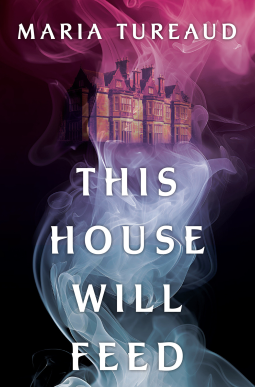
Now, I’m not usually a consumer (horrible choice of word for the topic) of anything horror-related. However, when Kensington Publishing offered the chance to read an ARC of this, I could not resist the opportunity. After all, had my ancestors not survived this particular trauma, I would not exist, so the least I could do was try to put myself even somewhat in their shoes some 180 years later. And on this note – boy did this book ever deliver. It was an incredibly disturbing and eye-opening account of the horrors experienced by the Irish people (my ancestors included) thanks in large part to the greed of their English overlords.
And yet, the author also somehow managed to craft a hopeful tale led by quietly fierce female protagonists. The resilience and determination displayed by the main character, Maggie, was as awe-inspiring as it was shocking considering her young age. No child should have to live to see their whole family die – though I know this still happens all too often in this world.
Because of the visceral trauma described so chillingly in this book, I cannot recommend it to anyone who gets queasy at the thought of death, which may very well be most people. After all, it should not be a spoiler considering the subject matter to mention that small children do die over the course of the novel…in horrendous ways. There is also a passing mention of cannibalism for survival. Not to mention it’s mostly based on truth.
All that being said, if you’re looking for an introduction to the horror genre without being completely, well, horrified, this one might be a good choice for you. Take that very specific recommendation on the horror genre with a grain of salt, though, since this may very well be the first horror novel I’ve ever read so I’m certainly no expert.
At the very least, it’s a devastating introduction to the Great Famine and the generational trauma wrought on an entire nation.
Forged in steel indeed.

Content Warnings: Child death, genocide, mental illness, misogyny, self harm, suicide, toxic relationship, violence, forced institutionalization, blood, grief, death of a parent, gaslighting, colonisation, classism.
And remember, even if you’re a horror fan, life somehow remains beautiful.
xo Erin

 Erin of the Hills