There was immediate silence as though cold water had been poured on a roaring flame.
Chinua Achebe, Things Fall Apart
After having devoured our gratefully-received evening meal and enjoying a good night’s sleep at the strangest accommodation of our trip, Dad and I headed out bright and early for the third-and-final leg of our France At War tour.
If I think back, I’m pretty sure we spent most of the 4 hour drive attempting some semblance of conversation while mentally preparing ourselves for what we knew was to come.
Having seen our fair share of military memorials and graves by this point, we were fairly certain this last stretch was destined to be the most emotional of all. I mean, we were culminating the whole thing with a Remembrance Day ceremony at Vimy Ridge. As far as World War history goes, as a Canadian, it doesn’t get much more emotionally poignant than that.
I think I was putting so much mental effort into preparing myself for the wave of despair I knew to expect at Vimy that I neglected to spare a thought for our next step: Dieppe.
Now, as a Canadian, not to mention a self-proclaimed history buff, you would think I know all there is to know about the travesty that was the failed landing at Dieppe. After all, it was our soldiers who bore the brunt of the casualties in this ill-fated training run for the later triumph at the beaches of Normandy. If you assumed this to be the case, I’m sorry to say that you would be wrong.
I do remember having learnt something about this remarkable-yet-largely-unremarked event of the Second World War in high school…but not much. We were told it was a failure that ended in a long list of casualties (mostly Canadian) but that the bright side was that it paved the way for the successful amphibious landing at the more famous beaches we had visited early in the trip. In fact, I think the tendency in high school history classes when I was a student was to highlight Canadian achievements, not failures (even if the failures were not our fault. Perhaps this has finally changed in the *gulp* 19 years since I graduated.
I’m not sure if I would have fared better with more knowledge but…this place left me shaking so much that even writing this today, over 10 years later, I can still feel the vibrations.
We didn’t go to all the landing sites from that fateful day, unlike our thorough tour of the D-Day beaches and honestly, I’m not sure I could have bared it if we had. We did, however, pick our way through some narrow streets to the main memorial for the Canadian soldiers lost during this “exercise”: the Square du Canada. Set against an old stone wall, this was a beautiful little memorial garden featuring multiple plaques about the Canadian landings at Dieppe. When I say I learnt a lot, this is quite the understatement.
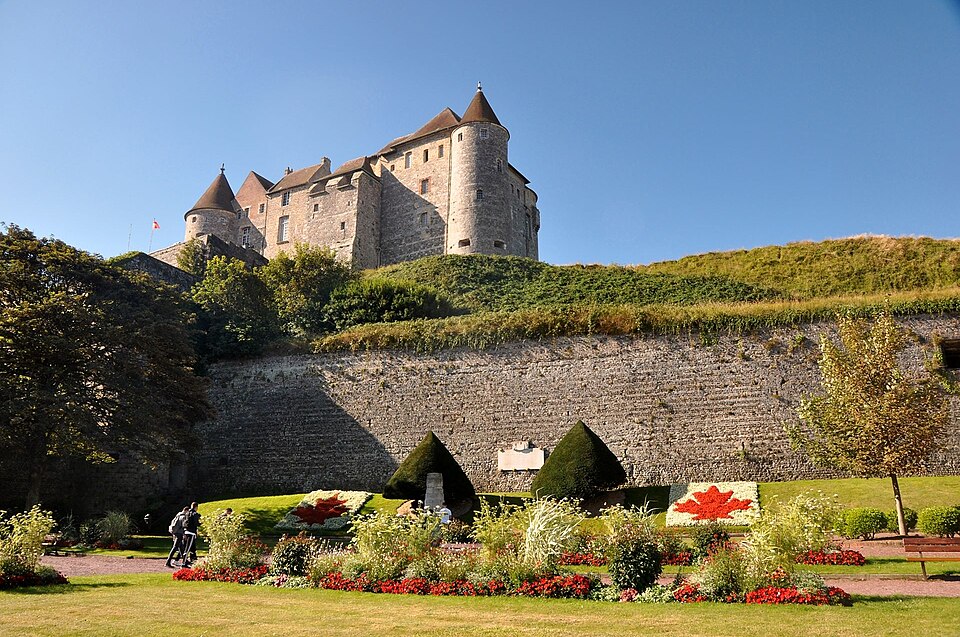
Despite the breezy, spacious nature of the monument, this was also where I had my second (but not last) claustrophobic moment of the day – the first having been in the simulated landing experience at the Juno Beach museum.
Now, I should clarify that I am not actually claustrophobic and therefore cannot imagine the level of terror someone who actually suffers from this phobia would feel in an enclosed space. I am, however, apparently highly sensitive to the memory of a place. By that I don’t mean the written or recorded memory in the form of plaques or memorials, though those certainly effect me as well. No, I’m referring to the feeling you get when you walk or stand somewhere where something significant, and often tragic, has occurred. Have you ever felt that?
When I experience this sensation it feels, well, suffocating. As if the air is suddenly oddly dense – packed with memories and perhaps even ghosts. At its worst, which it was close to at Dieppe, it can feel as if I’m drowning though nothing physical is actually depriving me of oxygen. The only way out of it is to leave the location causing the feeling, though taking conscious deep breaths and letting my tears flow freely as they may can help me to last long enough to truly take in a place’s story.
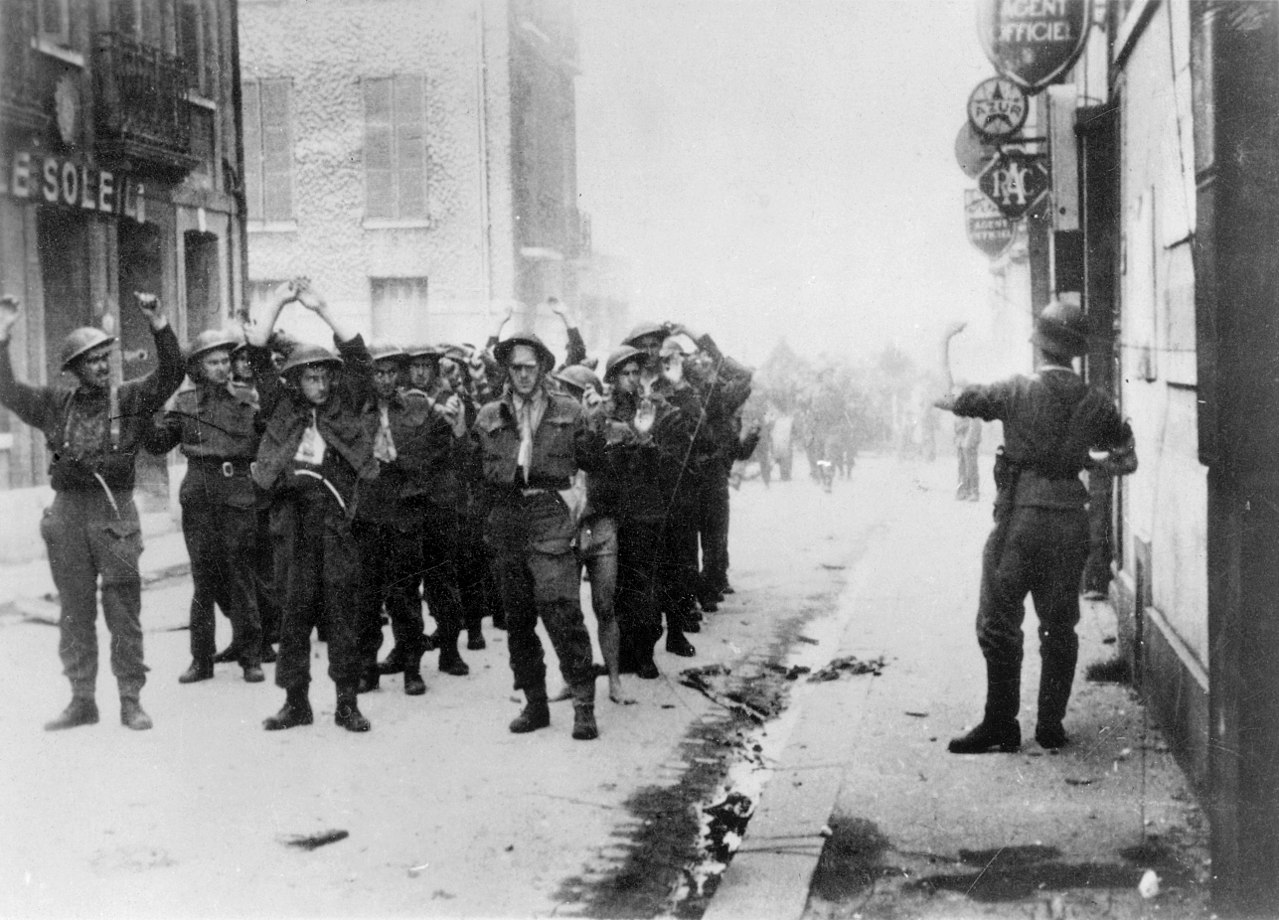
And the story of Dieppe is not for the faint of heart. It was, in short, a complete disaster. Only six hours into the raid, the sheer amount of casualties forced a retreat. Within 10 hours, 3623 of the 6086 men who had landed were killed, wounded or taken prisoner. Over half of these were Canadians. The numbers are stark. By the time it was all over there were 907 men killed, 2460 wounded and 1946 captured. Just from the Canadian ranks.
For comparison? 247 British infantry were killed and 3 US soldiers. This is not to suggest that any lives are more worth grieving than others. And the allies did also lose Navy and RAF fighters who were there to support those landing. But considering Canada’s miniscule population in comparison to the other countries involved in these battles…what a heavy loss.
And, truly, I could feel it in the very air. So many lives cut short for so little gain.
Yet, Mountbatten, in all his infinite wisdom, declared the losses a “necessary evil”. He said that the battle of Normandy was won on the beaches of Dieppe and that every man killed there spared 10 on the beaches in 1944. Cold comfort to the loved ones back home grieving their immense losses from a man who planned the attack but didn’t actually take part in it…
Random (if sombre) Historical Fact #26
To make matters even worse, if that’s possible, the German forces were giddy with victory upon inflicting so many casualties against their enemy. In fact, it was a propaganda coup for them when their need for one was already dire. With the intensification of allied bombings on German cities and the unimaginable casualties being sustained on the Eastern Front, Goebbels and Otto Dietrich took the opportunity to highlight the failure as a sign of German strength. And as if they didn’t already have enough corpses to show how heavy a hit the allies took, they even had POWs pose as dead bodies in these staged photographs. Perhaps not altogether surprising considering Goebbels’ track record but sickening nonetheless as every single one of those men taken prisoner had only just witnessed enough death to provide them with a lifetime of nightmares.
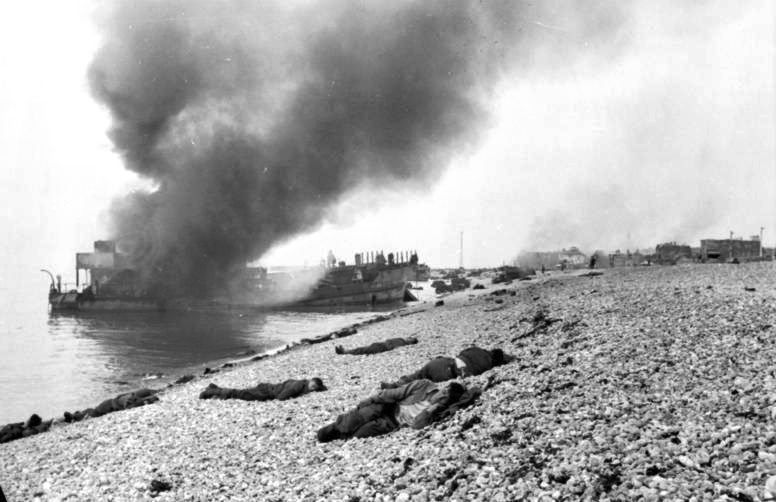
It really was one of the darkest moments of the war for Canadians – and one of the darkest moments of the entire trip for me. What began as intense anger at the sheer waste of it all was quickly transformed into simple yet profound sadness. Like cold water poured on a roaring flame.
And this was before we even got to The Somme.
These emotions have honestly been hard to revisit, even 10 years later, so I think I’ll end this one here.
You want to know something crazy?
Even in the depths of all this relived despair…I still think Life is Beautiful.
xo Erin

 Erin of the Hills
Well written daughter!
Phil Gurski 613 552 2114 ________________________________
Thanks Dad!
There’s been many times I’ve visited a historical site and thought I’d experience it academically, only to run through all the emotions. It’s good though, it means we’re really feeling it!
Fellow history lover, aspiring writer and traveller here. I’ve just found your blog, glad to connect.
Thanks for stopping by, Helen, and for taking the time to comment! I’m glad to hear I’m not alone in being overwhelmed by the emotions of a place where history has been made. I agree, really feeling it is not a bad thing. Happy to have you here!